
Addressing “Lawful but Awful” Content
What are the best ways to manage online content that is “lawful but awful”?

Advancing independent media, an open internet, and informed policy through global research, dialogue and innovation.
What are the best ways to manage online content that is “lawful but awful”?


Issue Primers
What are the best ways to manage online content that is “lawful but awful”?

How can we better protect the press from online harassment and abuse?

How can we better ensure the digital security of the press and protect against cyber threats?

How can we encourage the protection of an open internet?

How can the news media remain relevant, particularly with young audiences and underserved communities?

How can public policy addressing economic support for news enable independent, competitive journalism without creating political or legacy bias?

How can we ensure that mechanisms to stem disinformation aren’t used to restrict press independence or free speech?

How do we protect societies from synthetic media and “deepfakes”?

How do we enable the benefits and manage the harms of artificial intelligence in journalism?

How can copyright law be modernized in a way that benefits independent, competitive journalism and an open internet?

How can public policy enhance algorithmic transparency and accountability while protecting against political or commercial manipulation?

How can we ensure that algorithms identify and promote fact-based, independent journalism?

What are sustainable models for open distribution and consumption of news and information?

How will evolving technology and media formats change societal expectations for and relationships with news?

How can public policy enhance an open, innovative environment for a diverse press?

Iran emerges as a prominent example of decline in both internet and press freedoms. It serves as both a distinctive case marked by its own intricate challenges as a country and a microcosm of the global threats to press and…

This group is more able to innovate, represent diverse communities, and tell stories that might escape institutional newsrooms — stories we need more than ever. But independence, it turns out, is not so simple.

And Why the Answer Should Matter to Every Journalism Market in the World
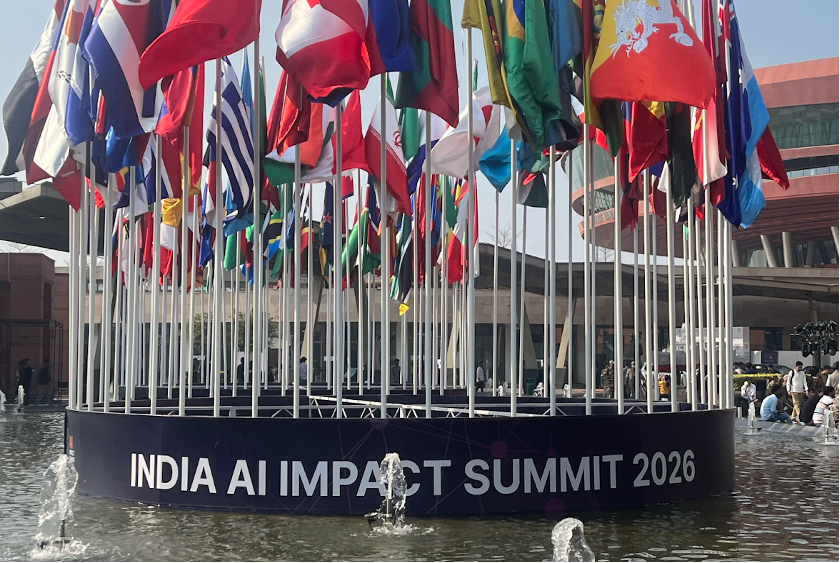
The scale of the India AI Summit has expanded significantly from the early global AI gatherings just a few years ago.

The third briefing from the AI and Journalism Research Working Group finds that organizational AI policies tend to prioritize principles and values over practical guidance.
Quick Data Hits

of journalists surveyed reported that their governments are exerting excessive control over their work.
Read full post: World Press Freedom Day 2025: About Half of Surveyed Journalists Report Their Government Seeks Too Much Control Over Their Journalism

of U.S. adults regularly turn to individual content creators or influencers for news and information online our survey found.
Read full post: Americans who Rely on Content Creators or Influencers for News are Active Consumers who Value the Role of Journalism in Society

of journalists surveyed said that AI will have a positive effect on enabling an informed public.
Read full post: What It Means to Do Journalism in the Age of AI: Journalist Views on Safety, Technology and Government
Policy Analysis & Other Research

South African newsrooms are shrinking. CNTI’s new report finds the indie info providers responding to that collapse with creativity, collaboration and a pointed push to decolonize local media.
Media Attention
“There’s a really cool organization out of America, the Center for News, Technology & Innovation.”

“Journalism isn’t immune to the larger trend of the gig-ification of labor.”

A few high-profile writers are thriving. For most, it’s still a grind.
CNTI’s new report is the most comprehensive look yet at the independent journalism economy – and it bummed some of you out.


While journalism cultures around the world grapple seriously with the impact of AI, China’s closed and repressive media system can only celebrate the trend as…

When asking AI about the news, readers “know the answers they are getting are not perfect.” They keep asking anyway.

Announcements & Event Outtakes
In partnership with the George W. Bush Institute, CNTI recently convened a global roundtable on the state of press freedom, bringing together journalists, media executives, researchers, legal experts and more.
Guest Essays
Opinions from experts working across journalism and technology.
This group is more able to innovate, represent diverse communities, and tell stories that might escape institutional newsrooms — stories we need more than ever. But independence, it turns out, is not so simple.


Digital safety for journalists must be addressed at multiple levels: by governments, technology companies, publishers, and researchers. Progress will require dedication and cooperation.”
— Amy Mitchell, Executive Director of CNTI